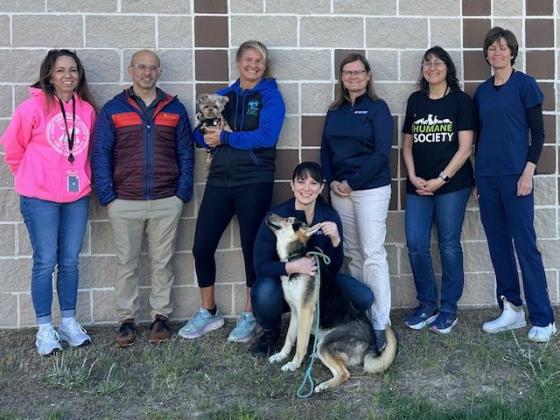
Lucky Dog Animal Rescue Heartworm Study
Lucky Dog Animal Rescue, in partnership with Toronto Humane Society, the University of Florida Shelter Medicine Program, and PetSmart Charities, is finalizing the analysis of a groundbreaking study which has the potential to change the way animal shelters across the United States treat heartworm infected dogs.
Heartworm disease — An unsolved challenge for animal shelters
Canine heartworm infection is present in all 50 states, but is most prevalent where mosquitoes capable of transmitting infection thrive in the warm and humid climate of the South. Since heartworm occurs most frequently in dogs with poor access to preventive healthcare, animal shelters that take in lost and unwanted dogs commonly encounter high numbers of infected dogs. Since its founding in 2009, Lucky Dog has been committed to rescuing dogs infected with heartworm disease, and in that time, Lucky Dog has seen the need for a more accessible, less time-intensive way to treat these vulnerable dogs.
While heartworm disease can be cured with proper treatment, most animal shelters have neither the time nor the resources to treat infected dogs. Not only does this leave animals vulnerable to significant heart and lung damage the longer the disease goes untreated, it also facilitates the spread of heartworms as mosquitos bites spread the worms between infected and not-yet-infected dogs. To make matters worse, adopters often shy away from adopting heartworm positive dogs due to the cost and inconvenience of managing a dog through heartworm treatment.
The current best practice “three shot protocol” is unattainable for most shelters.
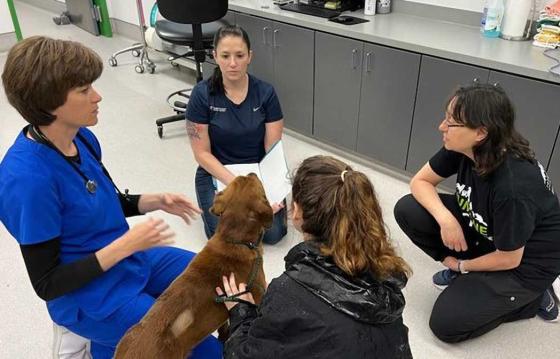
Timely treatment decreases the likelihood of lifelong heart and lung damage caused by heartworm disease. The American Heartworm Society recommends an evidence-based treatment protocol that includes 3 injections of melarsomine (Immiticide®Diroban®). However, it is difficult to provide this treatment protocol in shelters due to the prolonged length of treatment time, the cost of the treatment, as well as staffing and funding shortages. Some shelters allow heartworm-positive dogs to be adopted with outpatient treatment instructions, with a private veterinary clinic referral, or with no treatment at all. Other shelters euthanize heartworm-positive dogs. While these are necessary stopgaps, none of these solutions truly puts the health and safety of the dogs first.
Condensing the Treatment Timeline
Long heartworm treatment protocols can contribute to shelter crowding and distress in dogs that must be isolated from other dogs, cannot join playgroups, and are restricted to short leash walks for weeks to months at a time. More efficient protocols would make heartworm treatment of more dogs possible and reduce long-term kennel stress. In a retrospective study by Toronto Humane Society, starting melarsomine on Day 14 was as safe as starting on Day 601.
Can a new condensed heartworm treatment plan measure up to traditional protocols?
Our research team carried out a prospective, randomized controlled clinical trial comparing the safety and efficacy of two treatment protocols conducted over a shorter time frame than traditional protocols.
The two-year study was made possible by a grant from PetSmart Charities, which funds research to increase access to veterinary care. In developing the protocol, the researchers kept some key goals in mind:
- Match the safety of traditional protocols
- Achieve high treatment success
- Minimize the number of medical treatments for staff to carry out
- Decrease the length of time to complete the treatment protocol
- Contain treatment costs as much as possible
Dogs naturally infected with heartworms are transferred to the Lucky Dog Animal Rescue South Carolina Rescue Campus where they are spayed or neutered, vaccinated, treated for any illnesses or injuries, and then begin heartworm treatment.
Dogs were randomly assigned to one of two heartworm treatment protocols. Both protocols included the same medications but with different timing and frequency of the melarsomine adulticide injections. Both protocols were shorter than the American Heartworm Society Protocol. During treatment, dogs receiving two injections had one month of limited exercise whereas dogs receiving three injections had two months of limited exercise.
The dogs were closely monitored at Lucky Dog for the duration of heartworm treatment and the limited exercise period, after which they were available for adoption in the Northern Virginia-Eastern Maryland-DC area. Adopters agreed to take their dogs to a testing site six months after the last melarsomine injection to determine if treatment was successful. If the test was still positive it was repeated at nine months, at which time another positive test would be considered a treatment failure.
Heartworm treatment protocols
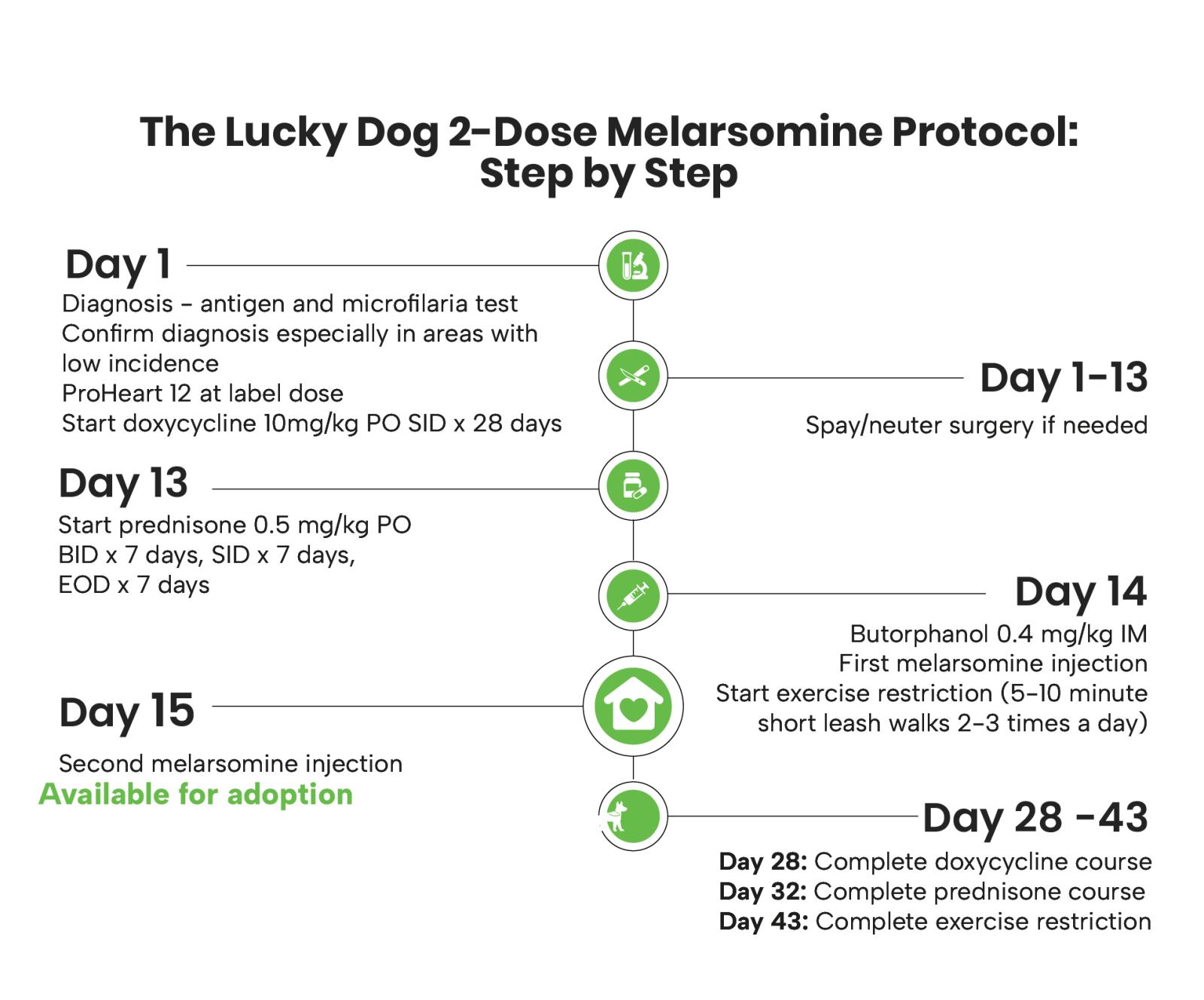
The Lucky Dog 2-Dose Protocol
The Lucky Dog Protocol, a compressed 2-dose melarsomine treatment protocol, includes heartworm preventive (ProHeart 12), antibiotic (doxycycline), and corticosteroid (prednisone) followed by a month of limited exercise. All intact dogs are spayed or neutered before melarsomine treatment. Melarsomine is administered on Days 14 and 15.
The Compressed 3-Dose Protocol Used in the Study
The “three-injection” heartworm treatment protocol used in the study included the same heartworm preventive (ProHeart 12), antibiotic (doxycycline), and corticosteroid (prednisone). The first melarsomine injection was given at Day 14, followed by a month of limited exercise. Then two more melarsomine injections were administered two days in a row, followed by another month of limited exercise.
Preliminary Study Findings Presented at Animal Expo 2026 study
The study included 168 dogs, 85 in the 2-dose group and 83 in the 3-dose group.
There were no statistically significant differences between the groups for safety or efficacy.
As we hypothesized, there were no statistically significant differences in safety and efficacy between the 2-dose and 3-dose groups. All dogs survived treatment. 97% of dogs successfully achieved a negative heartworm antigen test result by 9 months after the last melarsomine injection. Watch for the full results in our peer-reviewed paper to be published in a veterinary journal in the next few months.
Other important findings and insights
- There were no heartworm-related complications after spay/neuter in the study dogs.
- Butorphanol ~ 20 minutes before melarsomine injections was effective; ¾ of the dogs did not react to the injection at all.
- There were no significant differences between very high energy and other dogs for all clinical measures.
Caveats and cautions
- This study did not compare our protocols with the American Heartworm Society protocol.
- The study only included dogs with asymptomatic and mild/moderate heartworm disease. We don’t know if the Lucky Dog Protocol is safe for dogs with more severe disease.
Download a PDF of our preliminary heartworm study summary.